
How to Check Criminal History in Greenwich County
A useful Greenwich criminal record search follows the life of an event. The Connecticut Judicial Branch Criminal and Motor Vehicle Case Look-up is the best first stop for a pending prosecution or a conviction still within the public web window. It divides pending cases, convictions, daily dockets, and docket-number searches. That division matters. A name found in one mode may not appear in another, and the public court page is not a full police report or state rap sheet.
Use the full legal name, date of birth when the official system permits it, spelling variants, and any known docket or incident number. Then move to the source that answers the actual question. Greenwich Police documents the incident and arrest. The Stamford clerk holds the court file. SPBI maintains state criminal history. Connecticut DOC reports custody. Each record has a different job.
- Search pending and conviction records by defendant name.
- Repeat a match by docket number for better precision.
- Request the Greenwich Police report for the local event narrative.
- Check DOC when present custody or supervision is the question.
- Order an SPBI product when an official Connecticut history is needed.
Greenwich Has No County Sheriff
Despite the site label, Greenwich is a Connecticut town, not an operating county government. Connecticut abolished county government, so there is no Greenwich County sheriff, county jail, county clerk, or county criminal court. One Greenwich Police Department serves central Greenwich, Cos Cob, Old Greenwich, Riverside, Byram, Glenville, and the backcountry. Criminal cases leave town for Connecticut Superior Court at Stamford.
This fact prevents the most common search error. A person who looks for a county jail roster or sheriff booking log will miss the real custodians. Start with Greenwich Police General Services for local reports, GA 1 Stamford for criminal dockets, SPBI for official state conviction history, and Connecticut DOC for custody. Town Hall can route general municipal requests, but it does not keep the court file.
| Question | Official source | Record supplied |
|---|---|---|
| What did local police document? | Greenwich Police | Incident or arrest report |
| What charges were filed? | GA 1 Stamford | Docket and case file |
| What does Connecticut report? | SPBI through CCHRS | State conviction history |
| Is the person in custody? | Connecticut DOC | Custody profile |
Official Connecticut Background Checks
The Connecticut Department of Emergency Services and Public Protection, Division of State Police, operates the State Police Bureau of Identification. Its SPBI criminal-history hub directs current requests through the Connecticut Criminal History Request System. Published products distinguish a $36 name and date-of-birth search that reports whether a Connecticut record exists from $75 conviction-history products that can return a record copy. Confirm the current selection and price in CCHRS before ordering.
A fingerprint-supported search reduces the risk that two people with similar names will be confused. CCHRS pre-enrollment comes before fingerprint capture at SPBI or a participating police department. Greenwich Police offers appointment-only public fingerprinting on Thursdays for people who meet its local eligibility rules. That service captures prints; it does not itself produce a criminal-history report.
Greenwich appointments run from 10 a.m. through 1:50 p.m., and registration closes the prior day. The town requires current photo identification and proof that the applicant meets Greenwich eligibility rules. Its published charge is $10 for a service or card, with some added cards or services priced at $5. SPBI fingerprinting in Middletown is also appointment-only and publishes a separate $15 capture fee. These capture costs are distinct from the charge for the record search itself.
The official SPBI page is shown in the state criminal-history source below.
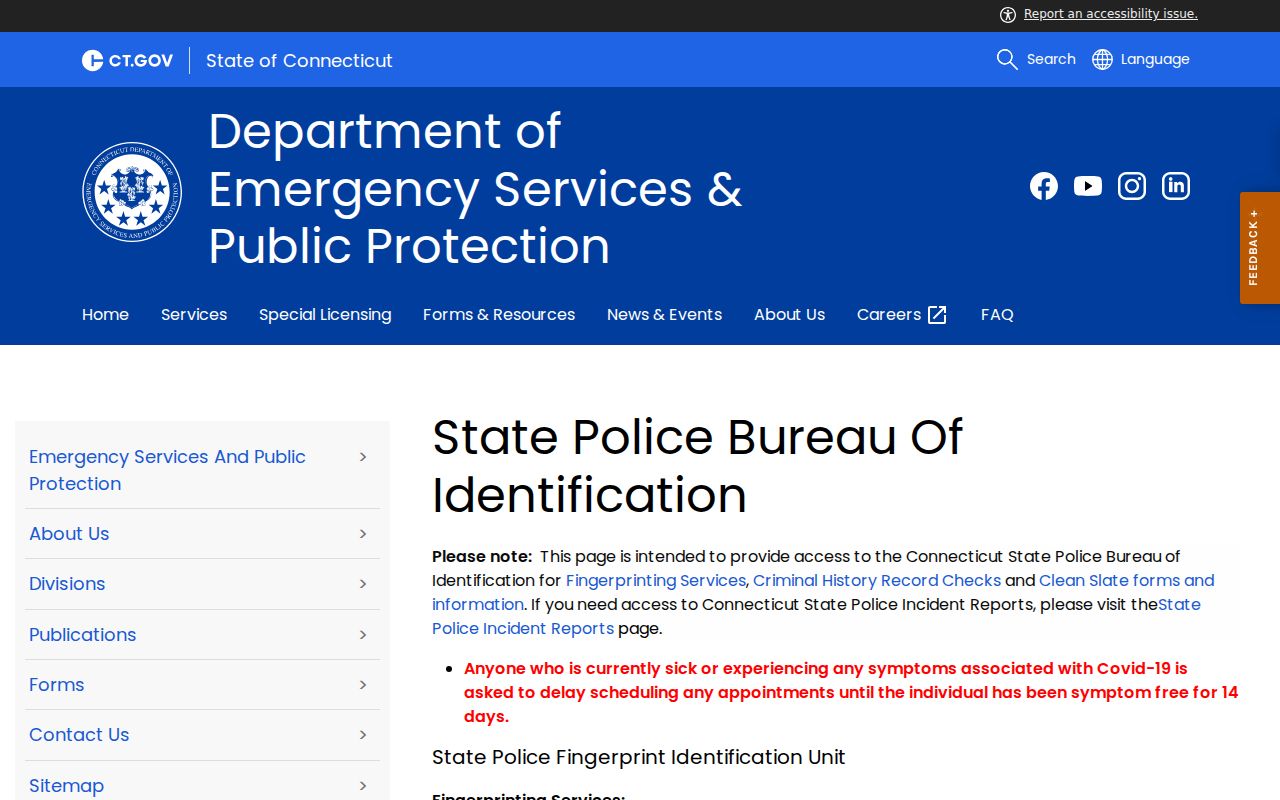
It connects the statewide record product with current fingerprint and Clean Slate information, rather than a commercial name-search service.
Greenwich Police Record Requests
The Greenwich Police General Services Division is the direct local channel. Requesters may use the online form, mail the printable form, or hand-deliver a written request to the first-floor records windows. Give a case number when known. Without one, identify the person, approximate incident date, location, and the type of record sought. The division says ordinary processing may take five to seven business days, while review or redaction can take longer.
Greenwich publishes a fee schedule and may require prepayment when the expected charge exceeds $25. Payment is due before completed material is released. A phone call can clarify procedure or status, but a specific written request creates the clearest path to an existing record.
| Copy medium | Published charge |
|---|---|
| Paper page | $0.50 |
| CD or DVD | $19.50 |
| Flash drive | $26 |
Greenwich Police General Services
11 Bruce Place
Greenwich, CT 06830
203-622-8024
Monday-Friday, 8:30 a.m.-4:15 p.m.
GA 1 Criminal Clerk
123 Hoyt Street
Stamford, CT 06905
203-965-5208
Business hours, 9 a.m.-5 p.m.
Types of Criminal Records
“Criminal record” is a broad label. A Greenwich Police incident report records the response, involved parties, and investigative facts subject to redaction. An arrest report records the basis and charges at the time of arrest. The court docket reflects charges actually filed, hearings, pleas, orders, disposition, and sentence. SPBI organizes reported state history, while DOC answers custody questions.
- Police reports: local narratives and arrest-event facts.
- Court files: filed charges and judicial outcomes.
- Repository records: Connecticut conviction-history products.
- Warrant listings: public Judicial Branch entries with statutory exclusions.
- Registry records: statutory public registration data, not a general rap sheet.
The sources can disagree without any one source being false. Police charges can change after prosecutor review. A court disposition can reach SPBI later. DOC may call a person “Accused,” which does not establish guilt. Compare dates, statutes, identifiers, and docket numbers.
Greenwich Court Records Can Disappear
The Judicial Branch web lookup is dynamic and limited. Online conviction information generally remains public for no more than ten years after sentencing and can leave the website sooner under Connecticut Practice Book section 7-13. Juvenile cases, youthful-offender matters, infractions, and violation convictions do not appear in the ordinary criminal lookup. Erasures, corrections, and pardons can also change results.
A blank result is therefore not a no-record certificate. Search all relevant modes, verify the spelling, and use a docket number when possible. For an older file or certified disposition, contact the GA 1 criminal clerk. A state conviction-history request answers a different question and may be the right next step for a personal record review.
Note: Greenwich court cases are held in Stamford, even when Greenwich Police made the arrest.
What a Greenwich County Criminal Record Shows
Record fields depend on the custodian. An SPBI product can organize names, aliases, date of birth, a state identifier, fingerprint transaction data, arresting agency and date, charges, disposition, and sentence when reported. A police file adds incident details and officer narrative. A court entry supplies its own docket and event fields. Match the same event across sources before drawing a conclusion.
| Name and identifiers | Legal name, aliases, date of birth, and source-specific identifiers. |
|---|---|
| Arrest data | Arresting agency, event date, alleged charges, and booking references. |
| Court case | Docket number, court, filed statutes, pleas, hearings, and status. |
| Disposition | Outcome recorded charge by charge, including dismissal or conviction. |
| Sentence | Custody, probation, fines, or other orders when publicly reported. |
| Custody status | DOC location and status fields, which are not proof of conviction. |
- Disposition
- The final recorded outcome of a charge.
- Nolle
- A prosecutor's decision not to pursue a charge, subject to Connecticut erasure rules.
- Docket number
- The court's unique case identifier and the safest way to repeat a search.
Greenwich Crime Data Is Context
Greenwich Police announced a daily-updated Crime Data Portal in April 2026. It is useful for recent trends and awareness, but the town warns that it may omit incidents, arrests, or other maintained records. Locations can be generalized for privacy or investigative reasons. The portal cannot replace an official report from General Services.
The town's FY2024-25 annual report recorded more than 41,000 calls for service and named vehicle theft as a local concern. Calls are not the same as crimes or arrests. Likewise, a trend count cannot identify the outcome of a specific case. Use the dashboard to frame a question, then use the records counter and court docket to answer it.
Public Access Laws
The Connecticut Freedom of Information Act starts from access to existing public records, but exemptions and other confidentiality laws still apply. Greenwich Police may redact or withhold parts of a record after a record-specific review. Open investigations, witness safety, confidential sources, certain victim information, and juvenile matters can limit release. FOI does not require an office to create a new custom report.
Key Connecticut rules:
CGS §1-210 sets the public-access rule and law-enforcement exemptions. CGS §1-212 governs copies and permitted fees. CGS §1-206 provides the FOI Commission appeal route. CGS §54-142a controls erasure in qualifying matters. CGS §46b-124 protects juvenile records. Practice Book §7-13 limits court information published online.
A person denied access may ordinarily appeal to the Connecticut Freedom of Information Commission within 30 days. That remedy concerns public access. It does not turn police into the custodian of a court file or SPBI record.
Greenwich Warrants and DOC Status
The Judicial Branch publishes an arrest-warrant search, but statutory exclusions and system limits mean it is not a complete Greenwich warrant check. Its internal PRAWN network also does not include every warrant requested by municipal or state law enforcement. For a personal warrant concern, check the public Judicial Branch result and pending docket, then call GA 1 and Greenwich Police nonemergency at 203-622-8004 for safe confirmation and surrender logistics.
Connecticut has a unified state correctional system rather than a Greenwich county jail. The Connecticut DOC Inmate Information Search can show an accused or sentenced person's custody status. Facility assignments change. The nearest correctional center is not proof of where someone is held, and “Accused” is not a conviction finding.
Sealed, Expunged, and Restricted Records
Connecticut mainly uses the term “erasure.” Under CGS §54-142a, dismissals, not-guilty findings, nolles after the statutory period, and other qualifying outcomes can lead to erasure. Clean Slate adds automated erasure for eligible convictions, though the published offense list does not guarantee that every record qualifies. Juvenile and youthful-offender matters follow separate confidentiality and erasure rules.
An Absolute Pardon from the Connecticut Board of Pardons and Paroles erases the official adult Connecticut criminal record if granted. The application has no Board filing fee, but it requires a recent State Police history report and fingerprints. Applicants should follow the current CCHRS instructions rather than rely on an old form or a commercial report.
The current pardon instruction identifies a specific CCHRS service code and requires the State Police report to be dated within one year of the application. A qualifying applicant seeking a DESPP fee waiver must send the waiver affidavit, request form, and hard-copy fingerprints to SPBI. A grant is never automatic. Multi-count cases and police files that refer to more than one person can also require a record-by-record review before all material is treated as erased.
The official Absolute Pardon process is pictured below.
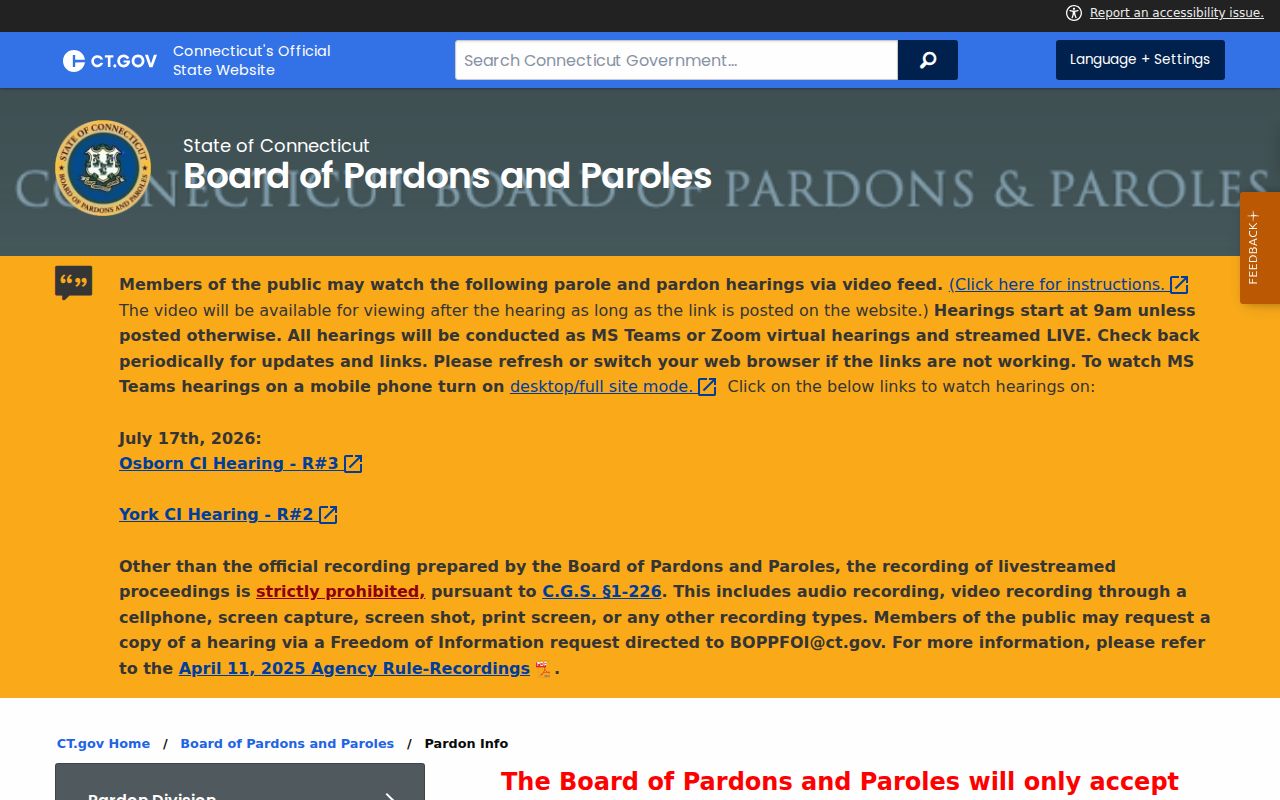
The Board explains the application path, while DESPP supplies the required state record and fingerprint channel.
Greenwich Clean Slate Updates
Clean Slate implementation has changed over time, so current eligibility and processing information should be checked at the state source. Website removal, factual correction, and legal erasure are not the same act. A court-page error belongs with the clerk. A Greenwich Police report issue belongs with the department. An SPBI record issue goes to the state criminal records unit.
For a factual state-history dispute, first obtain the police record and the final court disposition. Then contact the SPBI criminal records unit with the transaction number and date when available. That evidence lets the repository compare the arrest cycle with the reported court result. An eligibility dispute is different: the person may need the court, DESPP, or pardon process to determine whether the law authorizes erasure.
Connecticut's Clean Slate information hub is shown below.
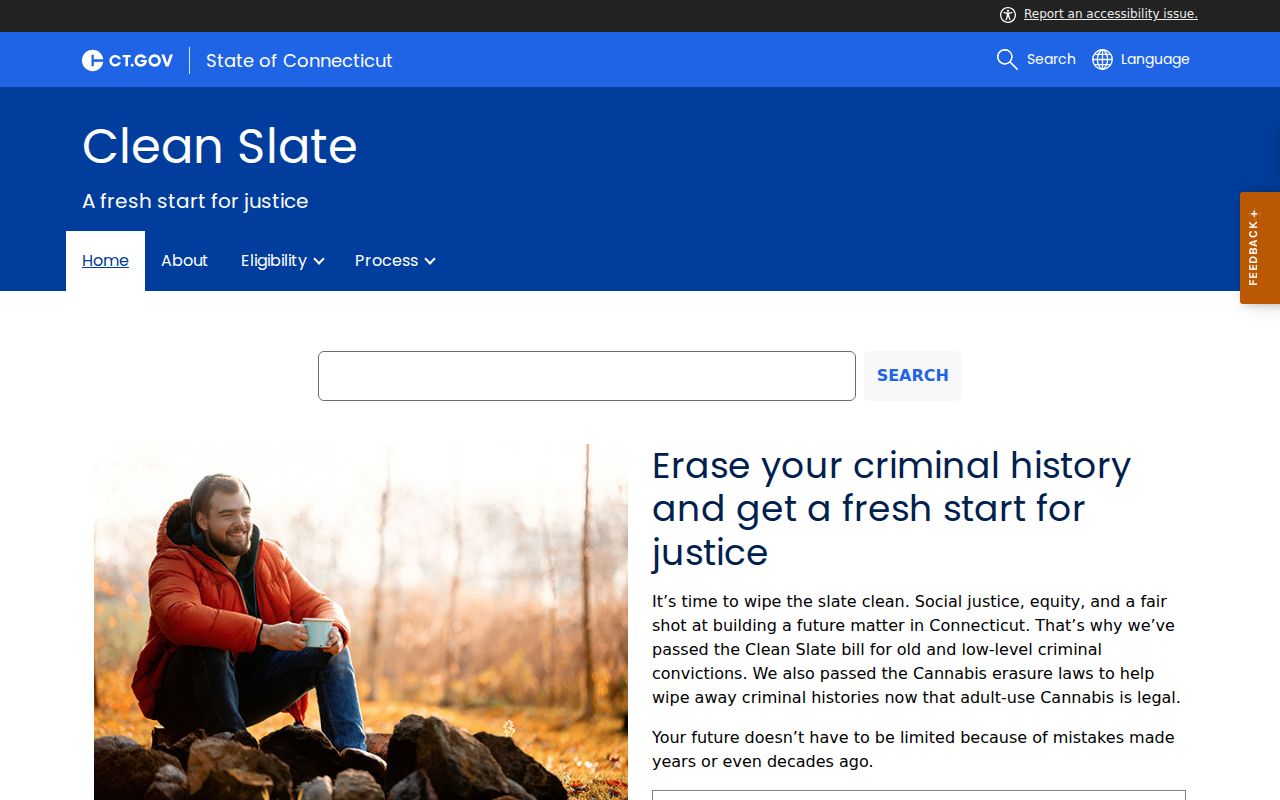
The state page is the sound place to confirm which convictions are eligible and whether a record still needs another remedy.
Correcting Greenwich Criminal Records
Send a correction to the office that controls the disputed field. Greenwich Police can address an error in its own incident or arrest report. The GA 1 clerk is the contact for a docket entry or disposition shown by the Judicial Branch. SPBI handles a mismatch in the state criminal-history product. DOC controls its custody profile. Sending one request to every office can slow the review because each custodian can change only its own record.
Collect the incident number, docket number, transaction number, event date, and a copy of the final disposition before making the request. State clearly which field appears wrong and what official document supports the change. A changed filed charge does not make the original arrest report inaccurate if that report correctly states what police alleged at the time. Likewise, a dismissed case may still require the legal erasure process before all eligible source records receive the treatment Connecticut law provides.
Note: A factual correction fixes data, while erasure changes the legal status and disclosure of a qualifying record.
Criminal Records by City in Greenwich County
Greenwich is the only incorporated town in scope. Its named communities are not separate cities and do not have independent police departments, jails, or criminal courts. One town profile therefore covers the correct local agencies without fabricating municipal offices for Cos Cob, Riverside, or Old Greenwich.
Greenwich Criminal History
64,801 estimated residents in 2025. Greenwich Police keeps local reports, while criminal cases route to GA 1 Stamford.